
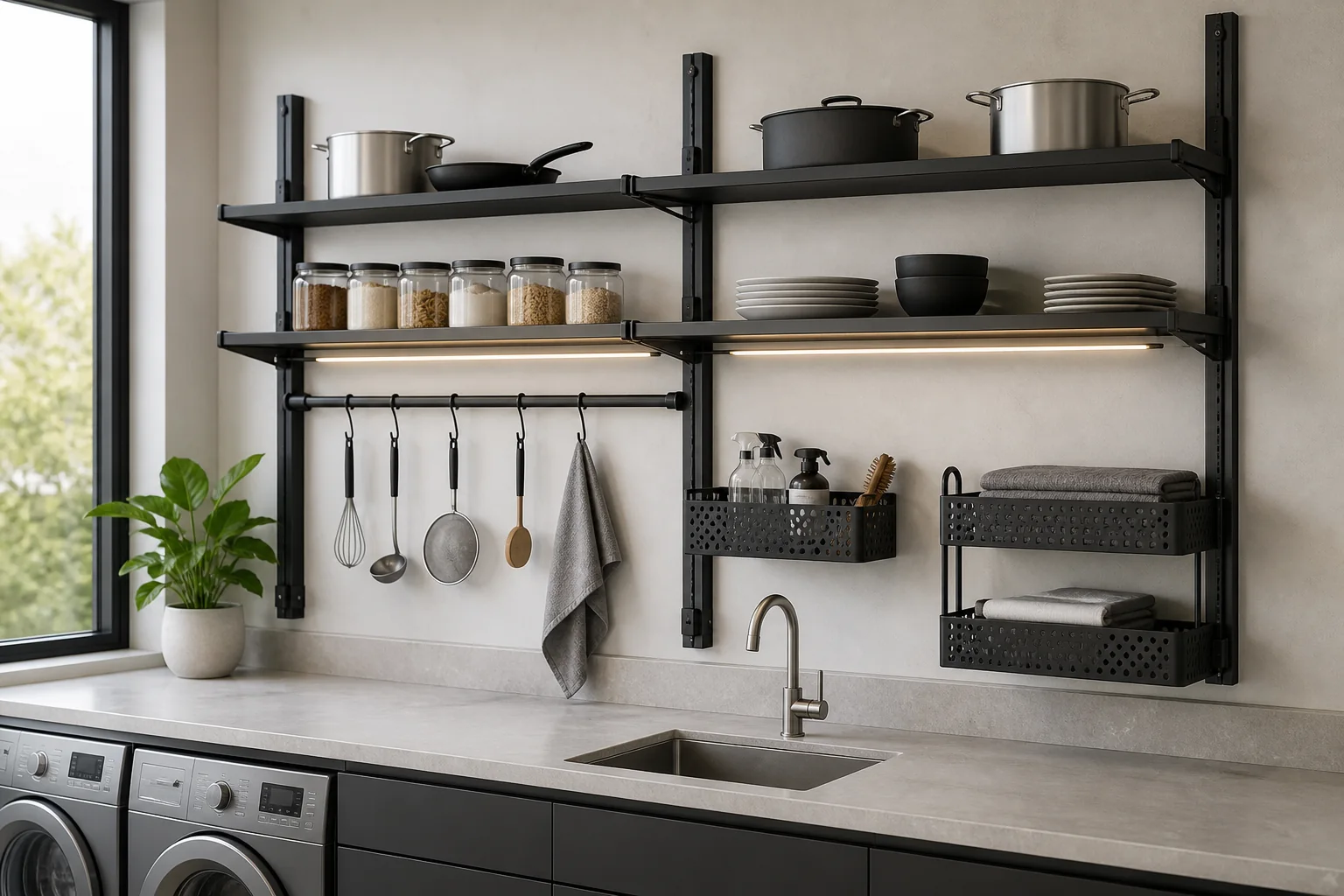
Aluminum alloy wall shelves provide lightweight storage for bathrooms, kitchens, hotel rooms, retail displays and compact residential interiors. A successful shelf specification connects the intended load with the shelf profile, bracket, wall substrate, anchor and installation spacing.
For distributors, contractors and project buyers, appearance is only one part of the decision. Dimensions, load expectations, finish durability, cleaning and packaging should be confirmed before production.
Where aluminum wall shelves work well
Aluminum is useful where a light, corrosion-resistant and easy-clean shelf is preferred. Common applications include toiletries beside a vanity, towels in a hotel bathroom, spices and accessories in a kitchen, decorative items in a living room, and small products in a retail display.
The same shelf should not be assumed suitable for every application. A display shelf holding lightweight objects has different structural requirements from a shelf carrying dishes, bottles or equipment.
Define the intended load first
State what the shelf will hold and the expected maximum distributed load. Concentrated loads near the front edge create different forces from evenly distributed items. The final capacity depends on the complete installed system, not only the aluminum profile.
Bracket spacing, fasteners and wall construction must be included in the review. The installer should confirm the substrate and select anchors suitable for concrete, masonry, studs or another approved backing. Decorative wall panels alone may not provide structural support.
Choose shelf width, depth and edge profile
Shelf width should align with the wall, tile grid or adjacent cabinet. Depth depends on the stored items and available circulation space. A shelf that projects too far can interfere with movement, while a shallow shelf may not support bottles securely.
Raised front or side edges can help retain bathroom and kitchen items. Open drainage slots may suit wet areas. A clean flat profile works well for displays, but the exposed edge and underside should still be visually finished.
Bracket and concealed fixing options
Visible brackets can become part of an industrial or commercial design. Concealed brackets create a floating appearance but require accurate wall preparation and sufficient structural backing. The fixing layout should be approved before tile, stone or decorative wall panels are installed.
Long shelves may need intermediate support to control deflection. Ask the manufacturer to review the span, load and bracket spacing instead of scaling a short shelf detail without engineering review.
Finish and color selection
Anodized, brushed, matte and powder-coated finishes can coordinate with faucets, cabinet hardware and interior metalwork. Black, gunmetal, champagne and natural aluminum are common architectural directions.
Approve a physical finish sample for repeat orders. Color and gloss can change under warm hotel lighting, cool retail lighting and daylight. The cleaning method should be compatible with the selected coating.
Bathroom and humid-area planning
Aluminum offers good corrosion resistance, but the complete product also includes fasteners, joints and wall anchors. These components should suit the humidity and cleaning products used in the room. Avoid dissimilar-metal combinations that have not been reviewed for the environment.
Wet-area shelves should not trap water. Provide drainage, drying access and sealed wall penetrations according to the project waterproofing details.
OEM and project packaging
Dealers and hotel projects can standardize shelf widths, finishes and model codes. Cartons can identify room type, installation area or retail SKU. Include brackets, fasteners and installation instructions according to the agreed supply scope.
A production sample is useful for checking color, edge quality, bracket fit and site installation before a larger batch is released.
Aluminum wall shelf RFQ checklist
- Application and items to be stored
- Required width, depth and edge profile
- Expected distributed and concentrated loads
- Wall substrate and available structural backing
- Visible or concealed bracket preference
- Finish, color and cleaning environment
- Quantity, packaging and delivery destination
Aluminum alloy wall shelf FAQ
Can shelf dimensions be customized?
Yes. Width, depth, profile, bracket layout and finish can be reviewed for the intended application and quantity.
How is shelf load capacity determined?
Capacity depends on the shelf profile, span, brackets, fasteners, wall substrate and load position. Provide the full installation conditions for review.
Can the shelves be used in bathrooms?
They can be specified for humid areas when the finish, fasteners, wall sealing and cleaning method are suitable for the project.
View aluminum alloy storage rack options or send your wall and load requirements for a quote.
How this guide is verified
Product details in this guide reflect APEX configurable manufacturing options. Final stainless grade, dimensions, finish, lighting, accessories, packaging, and delivery terms are confirmed in the approved quotation and production drawing.
Reviewed by APEX Stainless Solutions · Updated September 1, 2026