
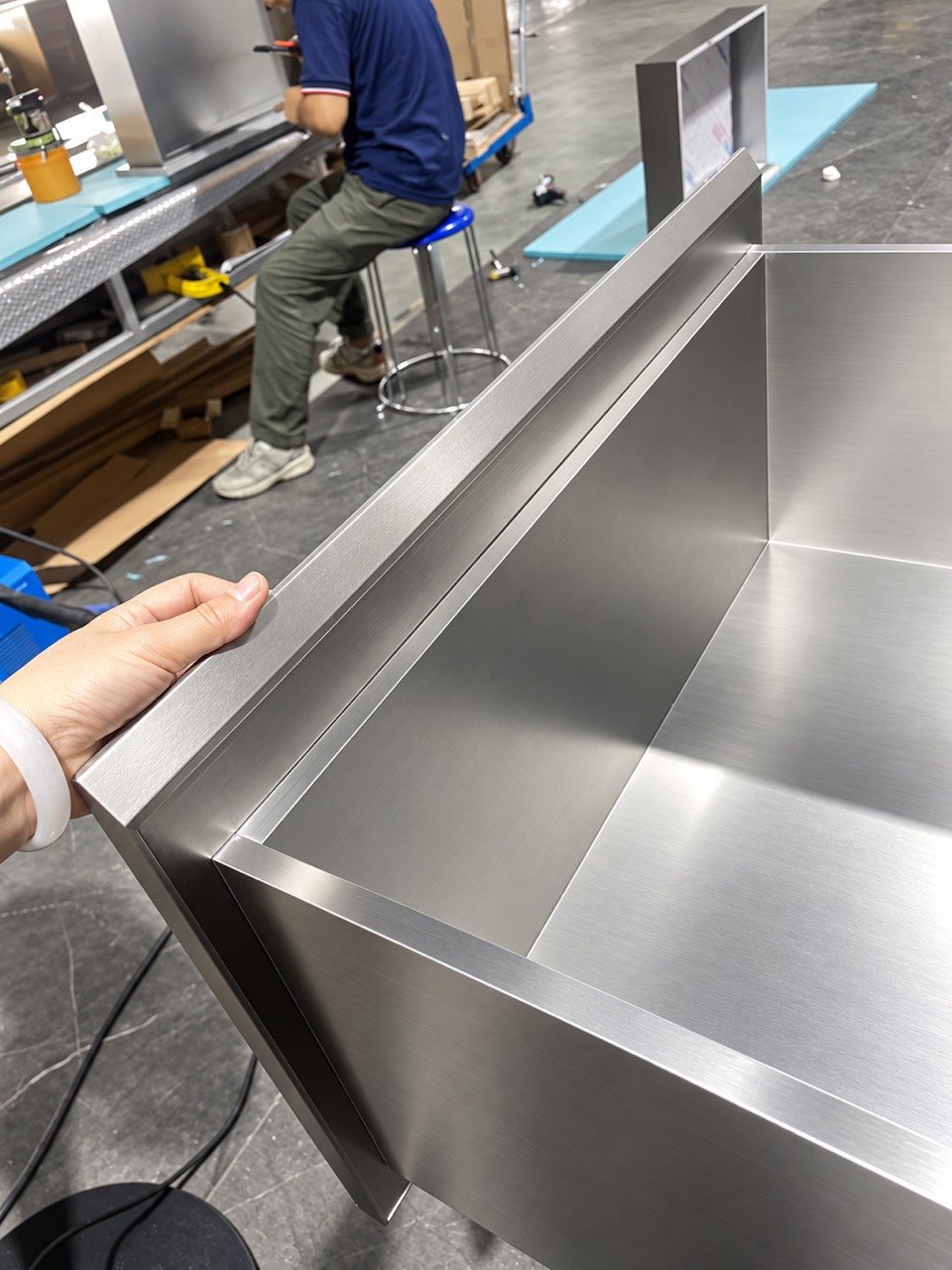
Stainless steel baseboards, also called stainless steel skirting boards, create a durable transition between a finished wall and the floor. They are specified where designers need a clean architectural line, routine-cleaning resistance, or a metal finish coordinated with doors, cabinetry, wall panels and recessed storage.

What is a stainless steel baseboard?
A stainless steel baseboard is a formed metal profile installed along the bottom of a wall. It can sit on the wall face, align flush with wall panels, return into a reveal, or conceal a small service gap. It protects the lowest part of the wall and creates a deliberate termination. It does not replace waterproofing, fire stopping, movement joints or an approved wall assembly.
Where is stainless steel skirting used?
- Hospitality and multifamily: corridors, elevator lobbies, bathrooms, amenity and back-of-house areas.
- Commercial interiors: retail, offices, restaurants and reception spaces.
- Residential projects: modern kitchens, bathrooms and entry halls.
- High-cleaning areas: subject to project hygiene, chemical and code requirements.
Profile choices
| Profile | Purpose | Coordination |
|---|---|---|
| Surface-mounted | Creates a visible metal band | Wall flatness, adhesive and top seal |
| Flush/recessed | Aligns with adjacent wall finish | Backing, wall thickness and datum |
| Shadow-reveal | Creates a deliberate recessed line | Reveal width, cleaning and corners |
| Returned edge | Stiffens and refines the termination | Return depth and rear clearance |
304 vs 316 stainless steel
304 stainless steel is a common starting point for interior architectural trim. 316 stainless steel is normally evaluated for chloride exposure, coastal air or aggressive cleaning. Choose the grade from documented exposure, not appearance alone, and state it on the purchase specification.
Finish selection
Brushed and hairline finishes reduce glare and coordinate with architectural hardware. Mirror finishes make scratches and substrate waviness more visible. PVD colors can coordinate with champagne, bronze, black or gunmetal schemes, but a physical sample should define color, gloss and grain direction. Finish names alone are not a color standard.
Installation planning
- Establish the finished-floor datum and final wall build-up.
- Confirm substrate flatness and a compatible fixing method.
- Coordinate corners, door frames, joints and terminations before cutting.
- Allow for building movement where the construction detail requires it.
- Protect the visible surface during adjacent trade work.
Adhesives, sealants and fasteners must suit the substrate, finish and local requirements. Follow approved shop drawings.
What to include in an RFQ
- Plan, elevation and dimensioned profile cross-section
- Total linear quantity and cut-length schedule
- Grade, finish, color target and grain direction
- Corner, end, door-frame and joint details
- Packaging, labels, destination and installation sequence
APEX reviews drawing-based architectural stainless work. MOQ, sample availability and production timing depend on the profile, tooling, finish, quantity and packing plan.
Related systems
Coordinate baseboards with custom stainless steel wall niches, stainless steel cabinets and the Architectural Stainless Steel Trims & Profiles range.
Frequently Asked Questions
Can stainless steel baseboards be made to a custom height?
Custom dimensions can be evaluated from a profile drawing. Tooling, MOQ and tolerances must be confirmed before ordering.
Is 316 stainless always required in a bathroom?
No. Grade selection depends on moisture, chloride and cleaning exposure. 304 is widely used indoors; 316 may suit more aggressive or coastal conditions.
Can the finish match PVD niches or cabinet panels?
Finish coordination is possible when parts are approved against the same physical sample, gloss target and grain direction.
What information is needed for pricing?
Send the profile, lengths, quantity, grade, finish, corners, packing and destination through the project quote form.
How this guide is verified
Product details in this guide reflect APEX configurable manufacturing options. Final stainless grade, dimensions, finish, lighting, accessories, packaging, and delivery terms are confirmed in the approved quotation and production drawing.
Reviewed by APEX Stainless Solutions · Updated October 12, 2026