
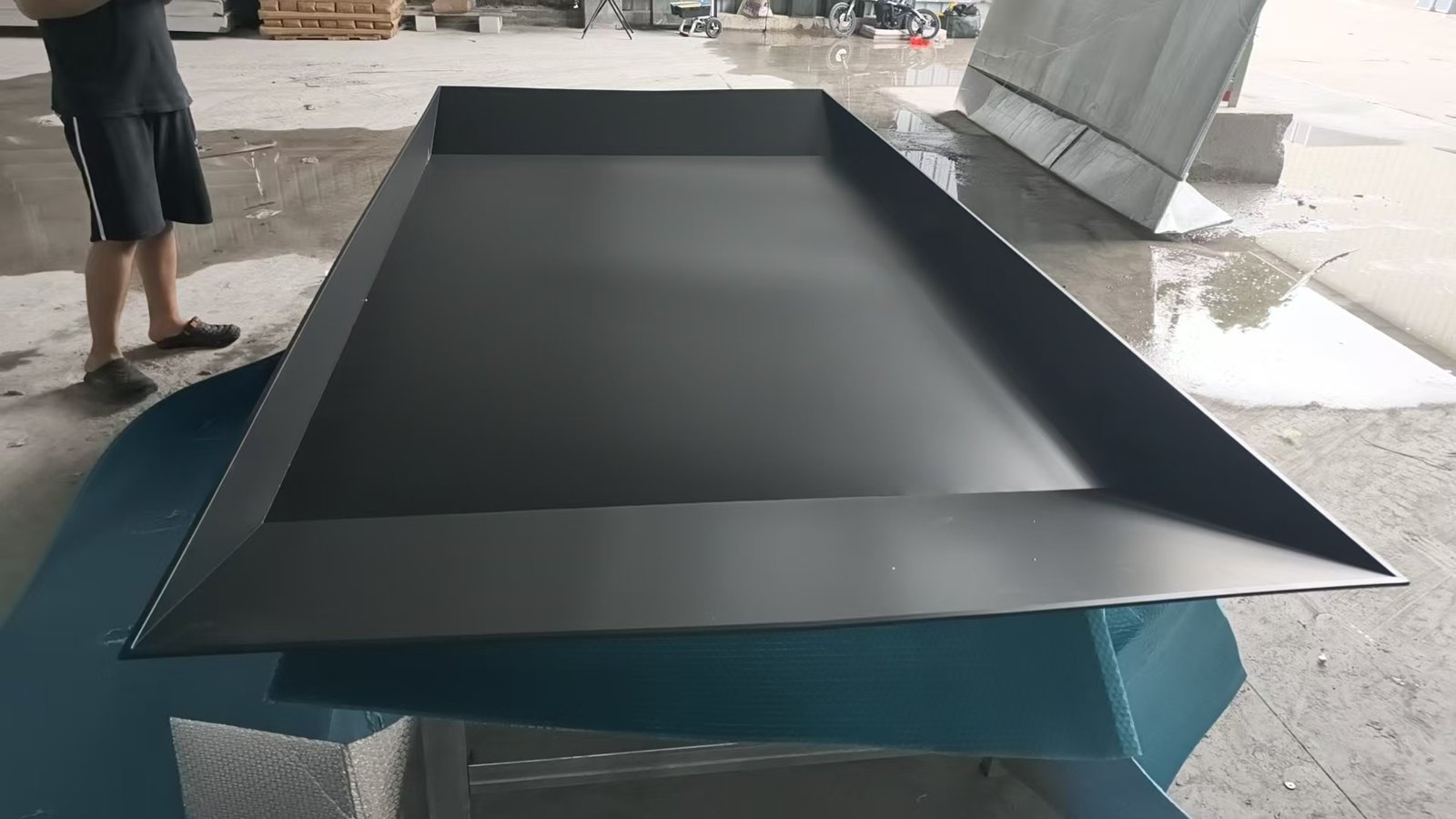
Stainless steel tile edge trim protects exposed tile edges and creates a controlled transition at corners, niches, wall ends and changes of material. Select the profile from tile build-up, geometry, exposure and the desired visual line—not from finish color alone.

What does tile edge trim do?
A tile edge profile covers or frames a vulnerable edge. It can finish an outside corner, terminate a tiled field, define a niche opening, separate two finishes or create a reveal. It does not replace substrate, waterproofing or movement joints required by the tile assembly.
Common profile forms
| Form | Typical use | Key dimension |
|---|---|---|
| L edge | Simple termination or wall end | Face and anchoring leg |
| Square edge | Framed line around tile and niches | Face width and tile pocket |
| U channel | Panel edge, divider or inlay | Internal channel width |
| T profile | Transition between finished surfaces | Top width and joint opening |
| Rounded corner | Softened outside corner | Radius and finish thickness |
| Shadow/reveal | Recessed line at a change of plane | Reveal width and depth |
Profile names vary. A dimensioned cross-section is the reliable communication method.
Match the trim to the installed build-up
Account for tile thickness, setting bed, waterproofing, substrate and finished alignment. Do not choose a nominal trim height from tile thickness alone. A sample assembly is useful for stone, textured tile or thick panels.
Finish options
- Brushed/hairline: low-glare and easy to coordinate with faucets and niches.
- Polished/mirror: bright but more revealing of waviness and scratches.
- PVD color: decorative bronze, champagne, gold, gunmetal or dark schemes; approve a physical sample.
- Bead-blasted/matte: diffuse appearance; agree cleaning and touch-up expectations.
Record the sample, gloss, grain direction and acceptable batch variation.
304, 316 or aluminum?
304 stainless is common for interior tile edges. 316 may suit chloride, coastal or aggressive exposure. Aluminum is a separate material: it is lightweight and often anodized or powder coated, but must never be described as stainless steel. State substrate and finish separately.
Application notes
In showers, coordinate the profile with waterproofing and drainage. Around stainless steel shower niches, define whether the niche frame covers the tile edge or tile terminates against a separate trim. In commercial areas, plan replaceable details where carts or luggage cause impact.
Specification checklist
- Dimensioned section and intended application
- Tile/panel thickness and full wall build-up
- Material grade and finish reference
- Length schedule, joints, corners and end caps
- Interior, wet, exterior or coastal exposure
- Packaging by room, floor or distributor SKU
Related guides
Compare stainless steel and aluminum trim, review the full profile range, or coordinate with architectural wall niches.
Frequently Asked Questions
Does tile trim make a shower waterproof?
No. Waterproofing comes from the approved substrate and membrane system. Trim finishes the edge and must be integrated correctly.
Should trim equal the nominal tile thickness?
Confirm the installed assembly, including adhesive bed and desired alignment, with the installer.
Can PVD trim match a stainless niche?
It can be coordinated when both are approved against the same physical sample under project lighting.
Can APEX quote custom lengths?
Drawing-based lengths and sections can be reviewed. Send section, quantity, finish, packing and destination through the quote form.
How this guide is verified
Product details in this guide reflect APEX configurable manufacturing options. Final stainless grade, dimensions, finish, lighting, accessories, packaging, and delivery terms are confirmed in the approved quotation and production drawing.
Reviewed by APEX Stainless Solutions · Updated October 12, 2026