
Quick answer: Export packing for custom stainless modules should maintain traceability from approved drawing to product label, carton code, loading position, and installation location. Surface protection, edges, corners, hardware, accessories, moisture exposure, and handling orientation require separate checks.
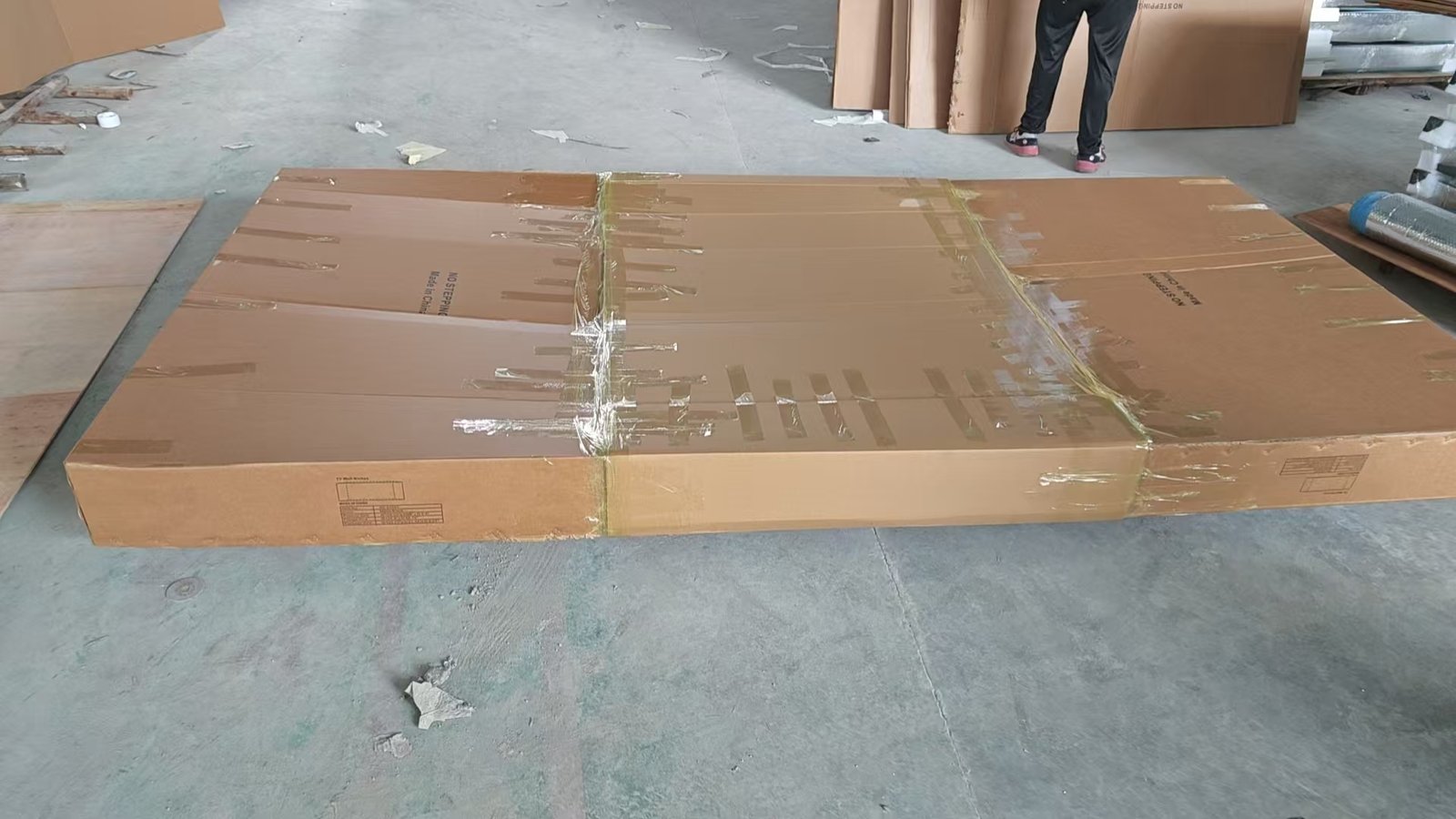
Case objective: preserve finish quality and installation traceability
Custom stainless products may look similar after packing, especially when one project contains repeated sizes. The carton mark must distinguish product type, size or drawing code, quantity, finish, orientation, room or area, and carton sequence without exposing unnecessary customer information.
| Control point | Evidence or buyer check |
|---|---|
| Identity | Drawing code, module code, carton number, quantity, and destination area |
| Visible finish | Clean surface, protective film status, face protection, and approved finish reference |
| Edges and corners | Protection selected for mass, projection, and likely handling impacts |
| Accessories | Hardware, lighting parts, fasteners, templates, and manuals listed and secured |
| Handling | Orientation and no-step or fragile marks used where relevant |
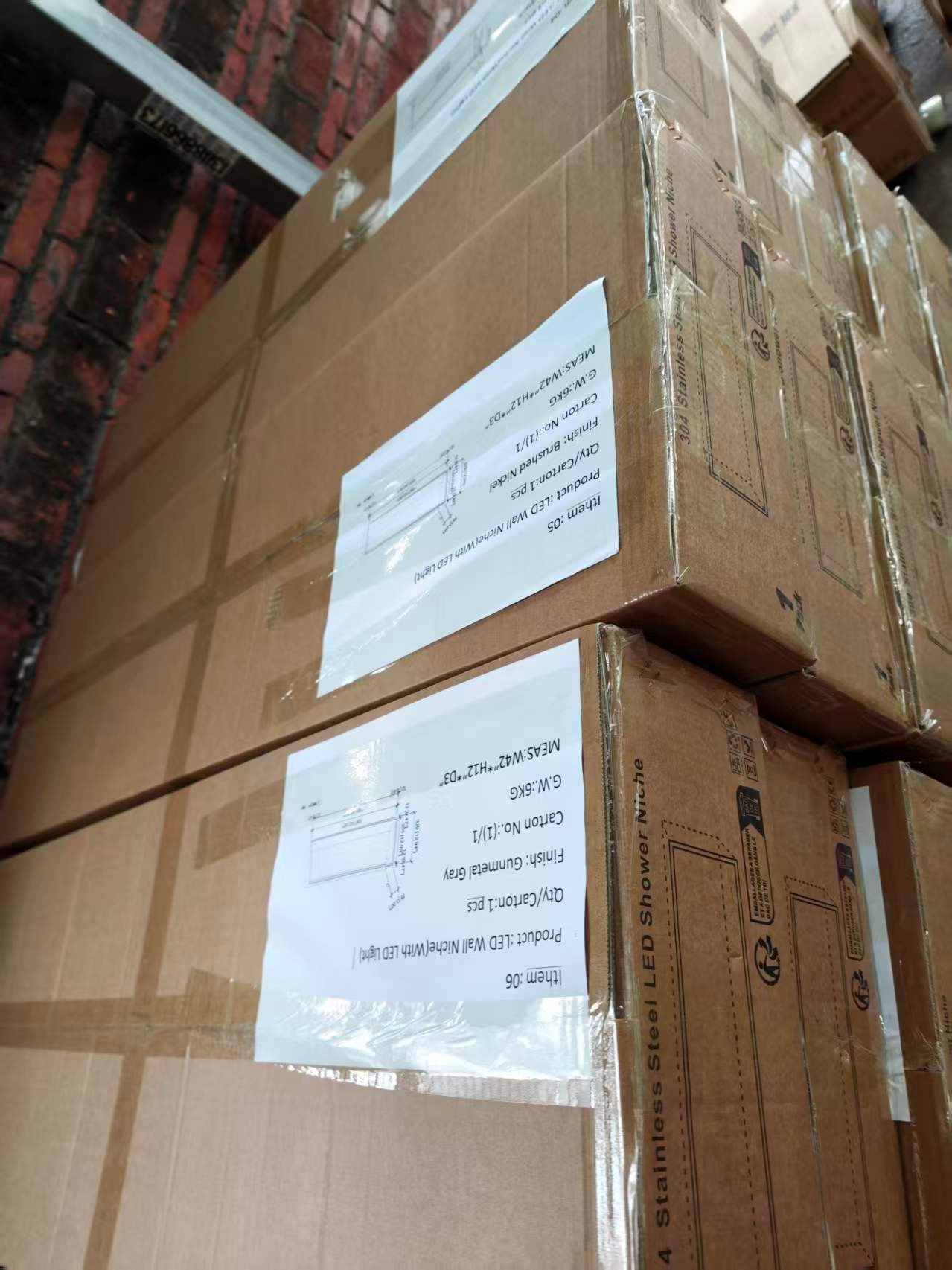
Specification sheets and batch labels
The photographed cartons carry product sheets with dimensioned drawings and finish information. For larger projects, the same principle should extend to a digital packing list so the buyer can search by room, building, elevation, module, or carton number.
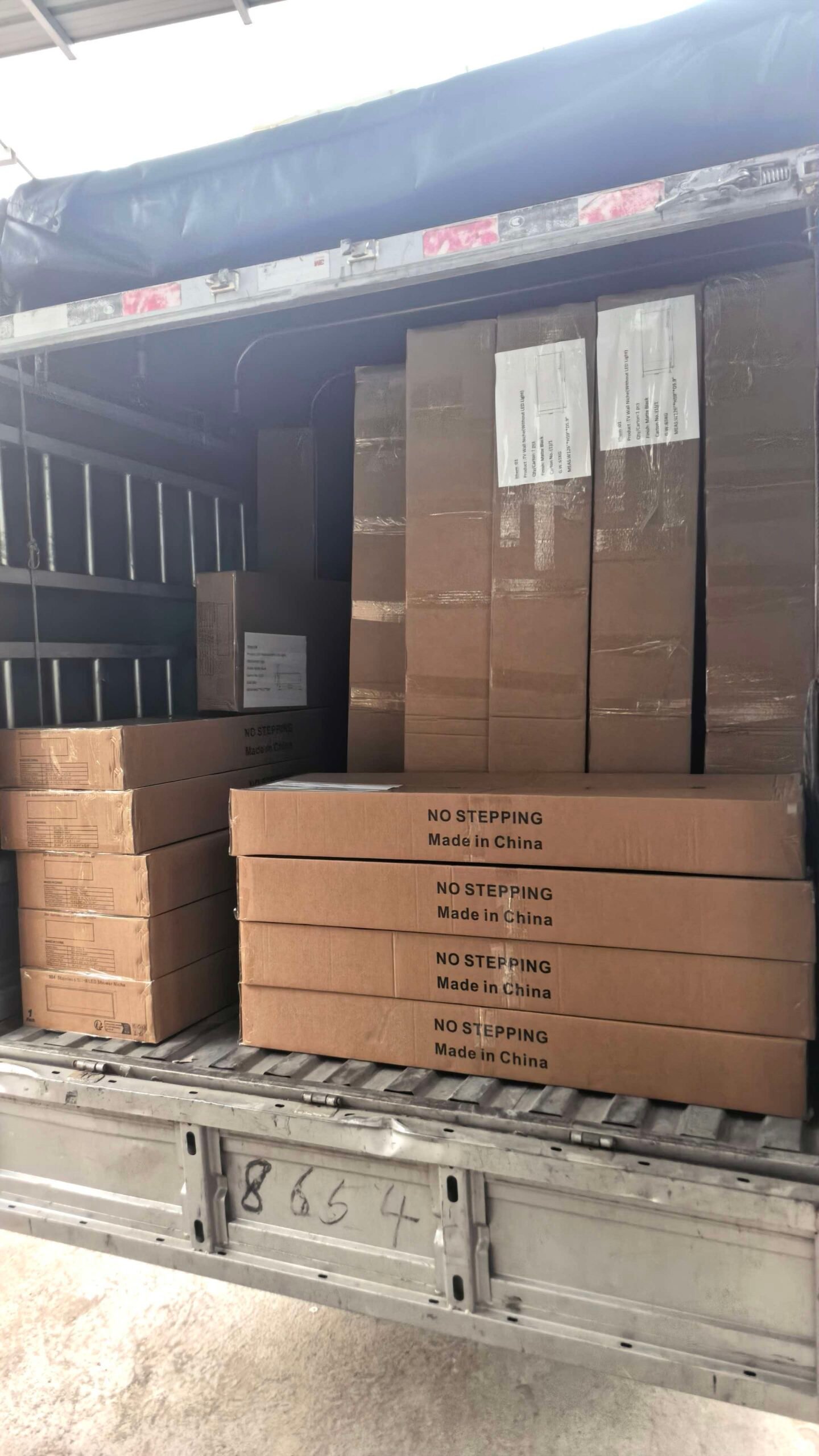
Loading long and mixed-format modules
Long cartons need restraint and support that prevent sliding, bending, tipping, and concentrated pressure. Heavy flat cartons should not be placed where they crush lighter or projecting components. The loading plan should consider unloading order and site access, not only vehicle capacity.
How this applies to outdoor kitchen cabinets
Outdoor cabinet shipments often combine carcasses, drawer boxes, door panels, fillers, end panels, hardware, and appliance-interface parts. A cabinet packing list should group items by module and preserve the installation sequence. Visible stainless faces deserve separated face protection, while loose hardware and accessories should be coded to the correct cabinet.
Review the cabinet component inspection case for the fabrication stage that precedes packing.
Pre-shipment buyer checklist
- Approved drawing revision matches labels and packing list.
- Quantities and left/right orientations are recorded.
- Finish faces, corners, openings, and hardware points have photo evidence.
- Accessories and spare parts are itemized.
- Carton dimensions and weights support freight planning.
- Marks match the destination and installation sequence.
- Handling and moisture risks are addressed for the chosen route.
Frequently asked questions
What do the photographs prove?
They document APEX cartons, product specification sheets, batch identification, upright module positioning, and truck-loading stages for a custom stainless module shipment. They do not independently prove alloy grade, concealed protection layers, route conditions, or delivery outcome.
Why use module and carton codes?
Codes connect the drawing, inspection record, packing list, carton, installation location, and replacement-part history. They are especially useful for multifamily, hotel, distributor, and multi-room projects.
Are wall niches and cabinets packed in exactly the same way?
No. The protection plan changes with size, weight, finish, protrusions, hardware, glass or lighting accessories, shipment mode, and handling risk. The photographed batch shows one real workflow, not a universal packing specification.
What should a buyer request before dispatch?
Request the packing list, carton or crate dimensions, weights, module codes, accessory list, pre-shipment photos, handling marks, destination labels, and confirmation of any buyer-specific packing requirement.
Request a drawing-based quotation
Send APEX your plan or elevation, module schedule, target dimensions, appliance cut sheets, finish reference, project quantity, destination country, and the required carton marks, installation sequence, freight mode, and buyer-specific packing standard. We can review manufacturability and identify the decisions required before pricing.
How this guide is verified
Product details in this guide reflect APEX configurable manufacturing options. Final stainless grade, dimensions, finish, lighting, accessories, packaging, and delivery terms are confirmed in the approved quotation and production drawing.
Reviewed by APEX Stainless Solutions · Updated October 20, 2026