
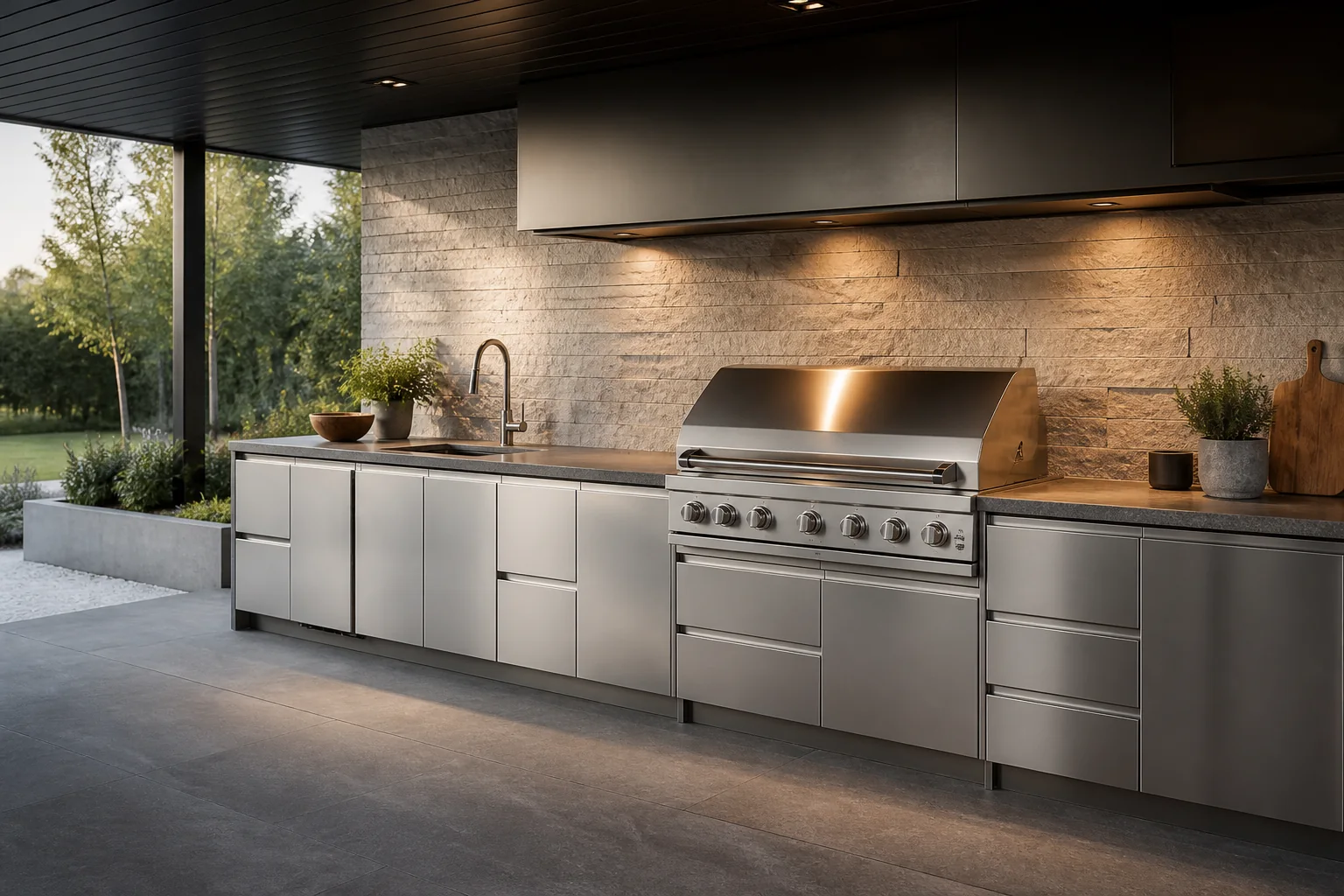
Indoor and outdoor stainless steel kitchen cabinets can share the same clean appearance, but they should not share an unreviewed specification. Outdoor cabinets face rain, direct sun, temperature changes, insects and more severe corrosion conditions. Indoor cabinets prioritize appliance integration, ergonomic storage and coordination with the interior finish.
U.S. kitchen dealers, contractors, developers and hospitality buyers should identify the installation environment at the start of the RFQ. Material, hardware, ventilation, drainage and packing decisions depend on where the cabinet system will be used.
Indoor stainless steel kitchen cabinets
Indoor kitchens can use stainless cabinet bodies with natural brushed doors, coated fronts or decorative metal finishes. The system may include base cabinets, wall cabinets, tall pantry units, islands and appliance housings.
Planning focuses on workflow and storage. Confirm refrigerator, oven, cooktop, hood, dishwasher and sink models before drawings are approved. Drawer travel, door swings and aisle width should be checked against the completed floor plan.
Outdoor stainless steel kitchen cabinets
Outdoor kitchens need construction details that manage exposure. Cabinet modules may include grills, side burners, sinks, refrigerators, ice makers, trash pull-outs and service panels. Each appliance requires the manufacturer’s cutout, ventilation and clearance information.
Covered patios still experience humidity, dust and temperature changes. An overhang reduces direct rain but does not make an indoor cabinet specification automatically suitable for outdoor use.
Choose the stainless steel grade
304 stainless steel is commonly specified for residential and commercial kitchen cabinetry. It offers a practical balance of corrosion resistance, fabrication performance and cost for many indoor and outdoor applications.
More demanding coastal or high-chloride environments may require 316 stainless steel or another project-specific approach. Distance from salt water, pool chemicals, cleaning products and maintenance frequency should be discussed. Material grade alone does not replace correct fabrication, compatible fasteners and routine cleaning.
Compare construction and sealing details
Indoor cabinets can use conventional protected joints and open service zones where the room remains dry. Outdoor designs may need protected drawer boxes, sealed or drained horizontal surfaces, compatible weather-resistant hardware and removable access panels.
Gas appliances require ventilation and service clearances. Refrigeration equipment needs airflow around the condenser. Do not close a complete appliance opening until the technical requirements have been checked.
Countertops, sinks and utility connections
Cabinet and countertop drawings should use the same appliance and sink dimensions. Confirm countertop thickness, edge profile, overhang and cutouts. Indoor stone can be selected for appearance; outdoor countertop materials must also tolerate the local climate and exposure.
Mark water, drainage, gas and electrical points on the plan. Outdoor utilities should include suitable shutoffs and service access. The cabinet manufacturer and site contractor need a shared reference drawing before production.
Finish and maintenance differences
Brushed stainless is practical for both locations, while powder-coated and PVD finishes can coordinate with the architecture. Dark outdoor finishes can become hot in direct sun, so color and exposure should be reviewed together.
Use soft cleaning tools and products compatible with stainless steel. Remove salt, food residue and pool chemicals promptly. Establish a maintenance schedule that reflects the actual environment rather than treating all outdoor sites the same.
Kitchen cabinet RFQ checklist
- Indoor, covered outdoor or fully exposed location
- Project address and distance from coast or pool
- Dimensioned floor plan and wall elevations
- Complete appliance, sink and faucet list
- Cabinet module, drawer and storage requirements
- Stainless grade, finish and countertop scope
- Quantity, packaging and delivery schedule
Stainless steel kitchen cabinet FAQ
Can one module schedule serve both indoor and outdoor projects?
The dimensions may be related, but exposure, ventilation, hardware and drainage details should be reviewed separately.
Can cabinets be made around locally purchased appliances?
Yes. Supply the exact model numbers and manufacturer drawings before production dimensions are confirmed.
Are custom colors available?
Brushed stainless, powder-coated colors and selected decorative finishes can be evaluated according to the design, environment and order quantity.
View indoor stainless steel kitchen cabinets, view outdoor kitchen cabinets, or send your kitchen layout for a project quote.
How this guide is verified
Product details in this guide reflect APEX configurable manufacturing options. Final stainless grade, dimensions, finish, lighting, accessories, packaging, and delivery terms are confirmed in the approved quotation and production drawing.
Reviewed by APEX Stainless Solutions · Updated September 1, 2026